Let’s dive into the world of applied mathematics. Knowing how to calculate square footage is an essential skill, whether it’s to assess the size of your home, plan renovation work, or even landscape your garden. Whether you are a construction professional, a gardener, or simply a curious homeowner, understanding the process of calculating area can be quite useful. It may seem intimidating at first, but with a good methodology and some tips, anyone can master this skill. Here’s a practical guide to help you navigate this universe.
Measuring the Room to Estimate Its Size
In daily practice, especially in non-English speaking countries, it is common to need to convert square footage to another more commonly used unit: square meters. This conversion can sometimes seem complex for those who are not familiar with these types of calculations. However, it is a fairly simple process, and you can easily learn how to do it.
To facilitate understanding of the concept ‘square foot to m2’, we can start by defining what a square foot is. It is an Anglo-Saxon unit of measurement representing an area equivalent to a square with each side measuring one foot (approximately 30.48 centimeters).
Now that we have clarified this, let’s get to the heart of the matter: how to convert square feet to m2? One square foot is approximately equal to 0.0929 square meters • or if we prefer to round for simplicity: about 0.09 m².
This means that if you have a given area in square feet and want to obtain its equivalent in square meters (m²), you simply need to multiply that value by our previously mentioned coefficient, which is here: square feet to m².
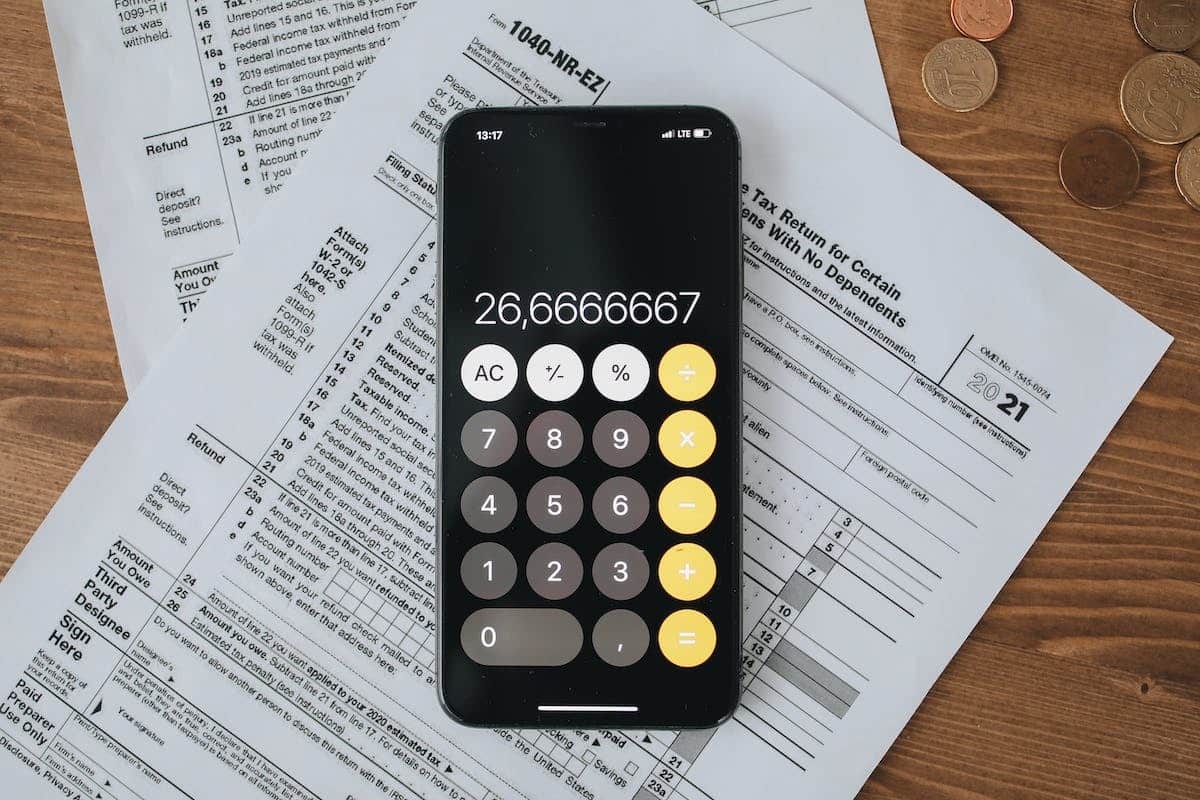
Don’t worry! Even if all these numbers may seem intimidating at first, remember that there are now several easy-to-use digital tools that can quickly perform these conversions for you.
So before any stress related to mathematical conversions, turn to your smartphones! You will easily find reliable mobile apps or websites that can effortlessly convert square feet to m². Technology is here to make your life easier!
Understanding how to correctly perform these transformations between different units of measurement is essential • especially in certain sectors like construction or architecture where specific evaluations of this kind are regularly used.
Converting Measurements to Feet for Better Understanding
The conversion of area to square feet may seem complex for some, but there are simple formulas you can use to accurately calculate the area of a room or given space. The main factor to consider when calculating area is the shape of the space to be measured.
If you have a square or rectangle, the calculation is quite simple. You just multiply the length by the width to get the area in square feet. For example, if a room measures 10 feet long by 8 feet wide, its area would be 80 square feet.
On the other hand, if you have a more complex shape like a triangle or a circle, things get a bit more complicated. For a triangle, you need to multiply the length of its height by its half base and divide the result by two. For a circle, you use π (pi) multiplied by the radius squared.
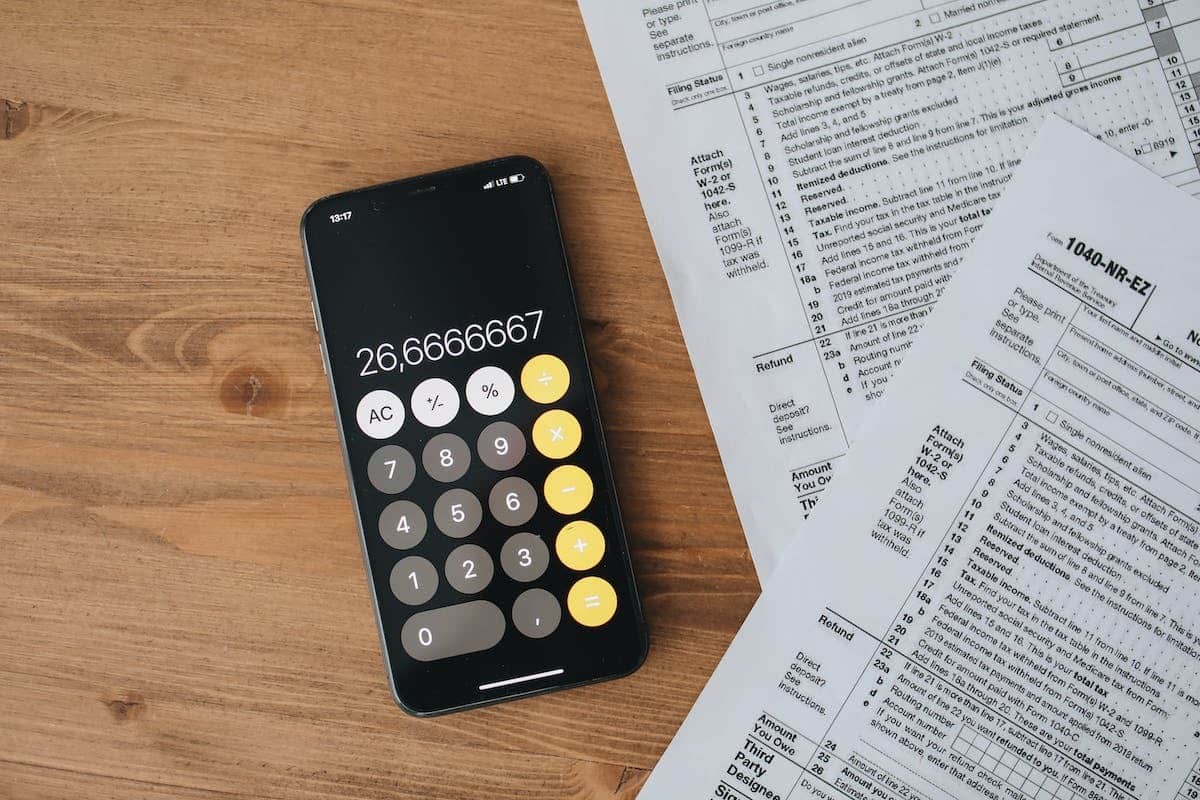
When performing these complex and precise mathematical calculations in your head, it can be difficult or even tedious. Fortunately for all of us, we now have access to technological tools that greatly facilitate these conversions often necessary in various fields such as real estate or architecture.
Dedicated mobile apps for unit conversions are available for free on modern smartphones and save time while eliminating any potential human error associated with manual conversions. These apps simply take your values in square feet and immediately provide their equivalent in other units such as square meters or acres. Just enter the value, and the app does the rest.
It should be noted that when evaluating the area of a room, all elements such as protruding angles, alcoves, or other non-rectangular areas must be taken into account. In these cases, you may need to divide the space into different sections to perform more precise calculations before adding everything together to obtain a total measurement.
Knowing how to calculate a space in square feet is a useful skill to master in certain specific fields. Thanks to modern technological tools that simplify these complex conversions as well as an understanding of the formulas suited to each geometric shape, you will now be able to perform these calculations with ease and accuracy.
Calculating Square Footage to Assess Available Space
When it comes to considering complex formulas for calculating square footage, certain details should not be overlooked. For example, if you have a room with protruding angles or irregular areas, it may be necessary to divide the space into smaller sections to obtain an accurate measurement. To do this, you can use techniques such as triangulation or cutting the plan into rectangles and triangles.
In the case of a protruding angle, you can measure the sides adjacent to the angle and apply the appropriate formula to calculate the area of the triangle formed by these two sides. You repeat this operation for each protruding angle present in the room and add all the obtained areas to get the total area.
If your space has alcoves or other non-rectangular areas, you will also need to make additional cuts. In this case, it may be helpful to use tape to mark the exact contours of each section to be measured. Once that is done, use the different geometric formulas suited to each shape (triangles, circles) to find their respective areas. Then add all these values together to obtain your final measurement.
It should be mentioned that when calculating the area of a complex space like an entire house or a plot with several buildings and adjoining gardens, it is often preferable to turn to a professional who will be better equipped and experienced in these specific calculations. Real estate agencies, architects, and surveyors can provide accurate measurement services, using specialized equipment such as lasers or drones to obtain an exact assessment.
Taking into account the complex formulas for calculating square footage may seem intimidating at first. With a little practice and the use of appropriate technological tools, you can achieve remarkable precision in your measurements. Don’t hesitate to call on professionals if you need a more accurate estimate or if your project requires in-depth knowledge of area calculation.
Considering Complex Shapes for Accurate Estimation
When it comes to calculating the square footage of a space, it is crucial to take into account the obstacles and corners present. These elements can significantly impact the measurements obtained, so it is important to think about appropriate adjustments for an accurate assessment.
Obstacles such as pillars, chimneys, or partitions can often reduce the available space in a room. In this case, it is recommended to take additional measurements around these obstructions to obtain a more realistic estimate of the usable area. To do this, you can trace a virtual outline around the obstacle using tape or use a measuring tape to directly measure the distance between the obstacle and the nearest wall. Then subtract this measurement from the previously obtained result to determine the corrected area.
Similarly, when there are non-rectangular corners in a room such as alcoves or built-in niches in the walls, they also require specific adaptation when calculating the area. For these complex areas, you need to take individual measurements using different geometric formulas suited to each particular shape (for example, triangles or circles). Then add all these values together to obtain the corrected final measurement.
It should be emphasized that some specialized equipment can be useful when you need to apply these adjustments for obstacles and corners. Lasers are very handy for accurately measuring distances between different surfaces, while drones can provide aerial views allowing for a comprehensive perspective of the space to be measured.
It is important to keep in mind that the complexity of the necessary adjustments can make it difficult to achieve an accurate calculation of the square footage. In these situations, consulting a qualified professional such as an architect or surveyor may be wise to ensure an exact assessment.
Taking into account obstacles and corners when calculating the square footage is crucial for obtaining precise measurements. By applying appropriate adjustments and possibly using specialized equipment, you can achieve a more realistic estimate of the available space. However, consulting an expert is often recommended for obtaining an even more reliable assessment in the context of complex projects.
Adjusting Measurements for Obstacles or Corners
When it comes to calculating the square footage of a space, it can sometimes be helpful to use online tools to facilitate the process. These tools are specifically designed to simplify calculations and provide a precise measurement of the area.
Among the available tools are online area calculators. These calculators allow you to enter the dimensions of a room or given space and instantly provide the corresponding area in square feet. Generally, you just need to enter the length and width in the designated fields and then click a button to get the result.
Some websites also offer mobile applications that can be downloaded for free on your smartphone or tablet. These applications provide a user-friendly and intuitive interface, making the process even simpler and quicker. You can thus perform your calculations anywhere, without needing a computer.
There are also specialized software in the construction field that integrate advanced features for the precise calculation of areas. These software not only allow you to easily measure the dimensions of a room but also perform automatic adjustments taking into account the obstacles and corners present in the space to be evaluated. They help you obtain an even more accurate measurement.
By using these online tools, you can save a considerable amount of time when calculating square footage. They reduce the risks of measurement errors, allowing you to obtain more reliable results.
However, keep in mind that these online tools are based on the information provided by the user and can therefore be sensitive to input errors. Be sure to take the time to carefully check all dimensions before submitting your measurements in the online tool.
Using online tools to facilitate the calculation of square footage is a practical and effective solution. Whether through online calculators, mobile applications, or specialized software in construction, these tools help you quickly and accurately obtain the measurement you need.
Using Online Tools to Facilitate Area Calculation
When you need to calculate the square footage of a space, there are certain elements to consider to obtain an accurate measurement. Make sure you fully understand the dimensions to use in your calculation.
It is common to measure the length and width of a room to determine its area. Keep in mind that sometimes, more complex formulas may be necessary if the room has an irregular shape or particular angles.
If you are dealing with a rectangular or square space, the calculation is relatively simple: just multiply the length by the width to get the result in square feet. For example, if a room measures 10 feet long by 8 feet wide, its area will be 80 square feet.
When you encounter spaces with more complex shapes like triangles or trapezoids, for example, using specific mathematical formulas becomes necessary. For a triangle, for instance, use this formula: (base x height) / 2. If the height of the triangle is 5 feet and its base is 6 feet, then its area will be (6 x 5) / 2.
To facilitate your calculations when it comes to more complex shapes or if you want to avoid any potentially costly human error, don’t hesitate to also call on professional services such as a surveyor who typically uses specialized instruments to obtain precise measurements.
It should be noted that the units of measurement used can vary from country to country. So always ensure you are using the correct unit for your calculations, whether it is square feet, square meters, or otherwise.
The calculation of square footage can be simplified by using online tools or mobile applications specifically designed for this purpose. It is important to understand the different mathematical formulas required for each geometric shape to obtain accurate results. If you encounter a complex situation or desire a high level of accuracy, don’t hesitate to consult a qualified professional in this field.