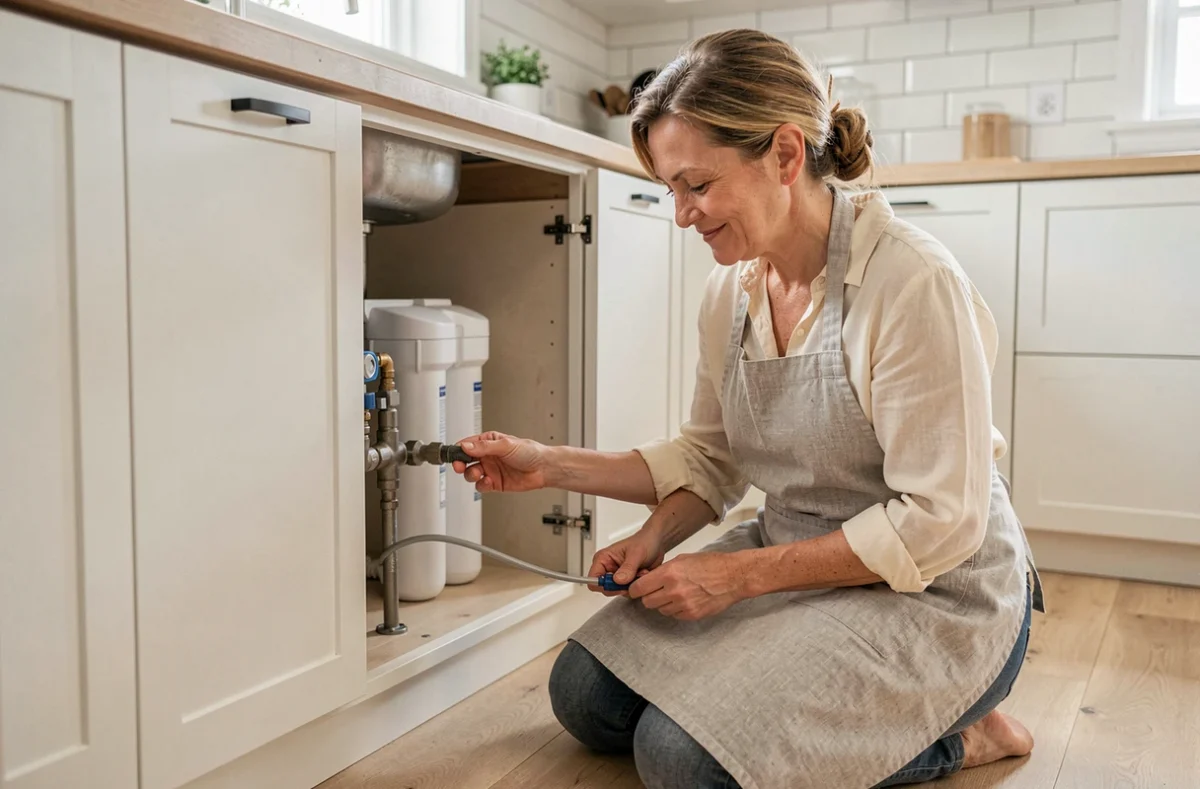
A leaking faucet, a poorly heated room in winter, an energy bill that rises without explanation: these small inconveniences eventually weigh on the comfort of a home. Improving your living space on a daily basis doesn’t necessarily require major renovations. A few well-chosen devices, targeted at the right areas, can truly transform the quality of life at home.
Insulation and joinery: the key area that conditions all others
Before investing in a new heating system or home automation, the first question to ask concerns the building’s envelope. Have you ever noticed that a room remains cold despite a radiator running at full capacity? The problem rarely lies with the device itself.
A faulty insulation negates the effect of any heating equipment. The walls, roof, and windows are the three areas through which heat escapes the most. Replacing single glazing with high-performance double glazing significantly reduces heat loss while also dampening outside noise.
To identify priority areas in your home, you can consult the ID Habitat website and its solutions, which lists equipment suitable for every configuration, from old houses to new apartments.
Joinery plays a often underestimated role. A poorly installed or aging window creates a localized thermal bridge that cools the entire adjacent room. Replacing joinery improves both thermal and acoustic comfort. It’s an investment whose benefits are felt from the first winter.
Heating and regulation: choosing equipment suited to your home
Heating represents the largest energy consumption category in most French homes. Why does this topic deserve so much attention? Because the choice of equipment directly depends on the area, existing insulation, and the type of housing.
Heat pump or condensing boiler
The air-water heat pump is well-suited for individual houses with a central heating circuit. It draws calories from the outside air to heat the water in the circuit. In apartments, the gas condensing boiler is often the simplest solution to install when the network is already in place.
An oversized unit consumes as much as an undersized one. Correct sizing requires a thermal assessment conducted by a professional, not an approximate estimate based solely on area.
Programmable thermostat and thermostatic valves
Room-by-room regulation changes the game. A programmable thermostat allows you to lower the temperature at night or during absences. Thermostatic valves, installed on each radiator, adjust the heat according to the actual use of each room.
These small devices are inexpensive, easy to install, and reduce consumption without sacrificing perceived comfort.
Energy performance and regulatory obligations of the DPE
Since January 1, 2025, homes rated G on the energy performance diagnosis no longer meet the minimum energy decency level in metropolitan France. F-rated homes will follow in 2028, and E-rated homes in 2034.
This regulation does not only concern landlord owners. It also signals to occupants that some highly energy-consuming homes have a structural comfort defect. A G or F rating generally indicates almost non-existent insulation, an obsolete heating system, or both combined.
For owners, renovating before the regulatory deadline presents a dual advantage: maintaining the ability to rent the property and enhancing its value. Insulation work, window replacement, and updating the heating system are the three levers that most improve the DPE score.

Housing adaptation: concrete equipment for daily life
In France, about 2.3 million homes are affected by adaptation needs, but only 6% of the housing stock is currently adapted. This gap primarily affects elderly people or those experiencing loss of autonomy, but not exclusively.
Adapting a home also means considering practicality for all occupants. Here are the devices that truly change daily usage:
- Grab bars and shower seats in the bathroom secure a room where most domestic falls occur
- Motion-sensor lighting in hallways and staircases prevents moving in the dark, useful for all ages
- Motorized roller shutters eliminate the daily effort of manipulation and facilitate the management of natural light
- A height-adjustable work surface in the kitchen adapts to different body types and mobility situations
The MaPrimeAdapt’ scheme allows for financing part of these works. Funding can cover 50% or 70% of the work depending on the household’s resources, with mandatory support from a project management assistant. In 2025, the scheme enabled the adaptation of over 36,000 homes, although Anah has acknowledged management tensions and a backlog of applications pushed to 2026.
Ventilation and indoor air quality: an often-overlooked piece of equipment
We think of heating, insulation, and joinery. Ventilation rarely tops the list. This is a common mistake.
A well-insulated but poorly ventilated home accumulates moisture. Condensation appears on windows, mold develops in the corners of rooms, and air quality gradually deteriorates. Mechanical controlled ventilation (VMC) is the mandatory complement to any thermal renovation.
Single-flow VMC is sufficient in most homes. It extracts stale air from humid rooms (kitchen, bathroom, toilets) and lets fresh air in through air inlets in living areas. Double-flow VMC, which is more efficient, recovers heat from outgoing air to preheat incoming air. It is particularly justified in new constructions or major renovations where air tightness is very high.
Improving your habitat rarely involves a single miracle device. It is the coherent combination of insulation, suitable heating, correct ventilation, and small practical adjustments that produces tangible results. The regulatory timeline of the DPE now pushes owners to act, but even without obligation, each addressed area translates into measurable comfort gains from the first few weeks.