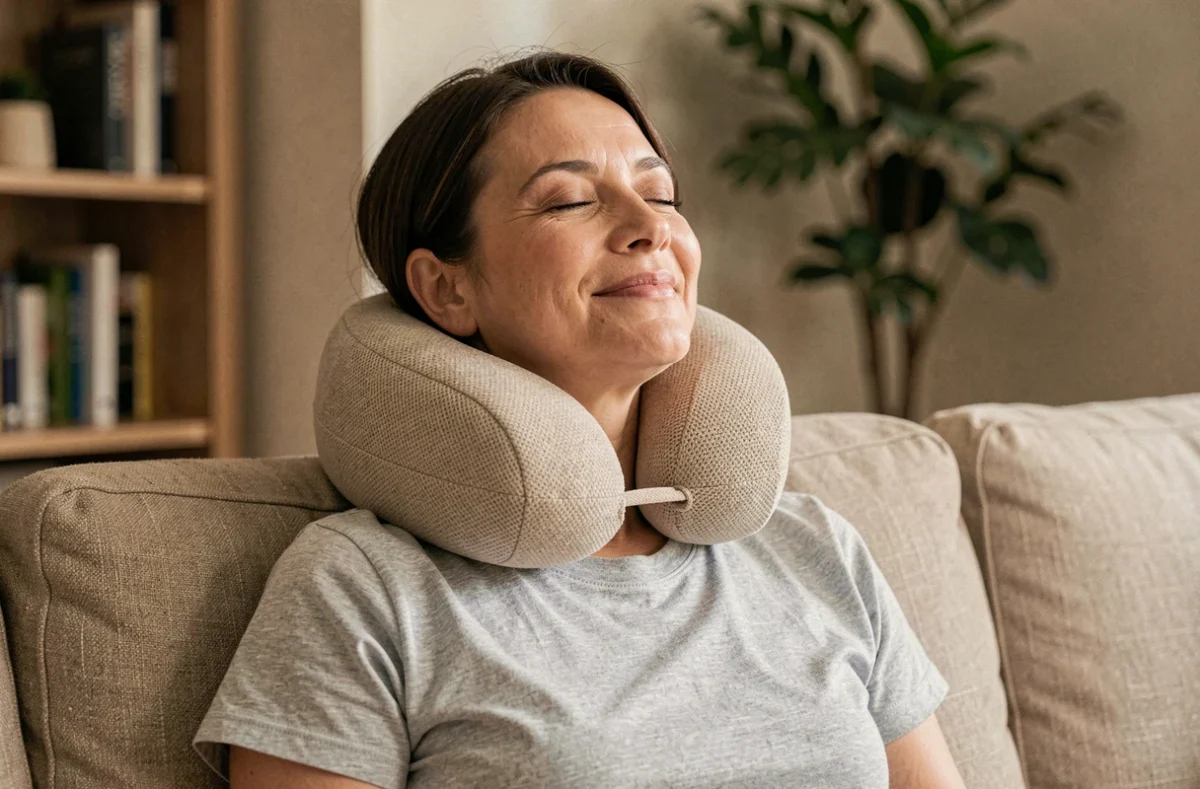
Neck massage cushions are becoming increasingly common in wellness stores and on online marketplaces. Their promise: to relieve tension in the neck and shoulders without booking an appointment with a practitioner. Technologies vary (shiatsu, kneading, infrared heat), prices range widely, and user reviews swing between enthusiasm and disappointment. Before investing, there are a few points worth examining closely.
Mechanical massage and neck pain: what the evidence really shows
A common shortcut is to present a massage cushion as a treatment for neck pain. Available reviews cover massage in general, not consumer electric devices. Extrapolating these findings to a specific model is misleading.
A cushion with rotating nodes mimics mechanical kneading. This action may temporarily relax tense muscles in the neck and shoulders. No identified source supports the claim that it corrects an underlying structural cause of pain or replaces a medical diagnosis when discomfort persists.
User feedback confirms occasional relief after a day at the office or a long journey. Several people who consulted a comparison of neck massage cushions note that the relaxing effect is real, but short-lived. The main benefit is comfort, not treatment.

Practical risks of a heated neck cushion: heat, pressure, and falling asleep
The heat function, found on most models, enhances the feeling of muscle relaxation. It also has drawbacks that are rarely highlighted in product descriptions.
Prolonged heat can cause irritation or superficial burns. The risk increases if the user falls asleep while the device is running. An automatic shut-off is an important safety feature to check for before buying.
As for mechanical pressure, massage nodes held against the same spot for too long can cause bruising or worsen existing pain. Models with a single intensity setting are more problematic than those that let you adjust the speed or depth.
- Check whether the device has an automatic shut-off and how long it takes to activate before buying.
- Never use the device while lying down in a position that could make you fall asleep, unless it has a reliable timer.
- Start at the lowest intensity during your first sessions to assess how well your neck tolerates it.
Shiatsu massage cushion, U-shaped model, or shoulder massager: which style suits which use?
Choosing a style depends less on personal taste than on how you plan to use the device. Three main types are available on the market.
A massage cushion placed on an armchair
It rests against the back of an office chair or sofa. Pressure comes from the weight of your body against the rotating nodes. This style is suitable for regular home use, but the quality of the massage depends on how well the chair supports it. On a chair that is too soft, the nodes are less effective.
A rechargeable U-shaped model
Worn around the neck, it works without being plugged into a wall outlet. Its main advantage is portability. You can use it in a car (as a passenger), while travelling, or at the office. Its drawback: the pressure is often weaker than with a cushion supported by a chair, since the device rests only on your shoulders.
A shoulder massager with handles
The user directly controls the pressure by pulling on the handles. This style allows for precise adjustment, but requires strength in the hands and arms. For someone with limited upper-body mobility, this type of device may be difficult to use.
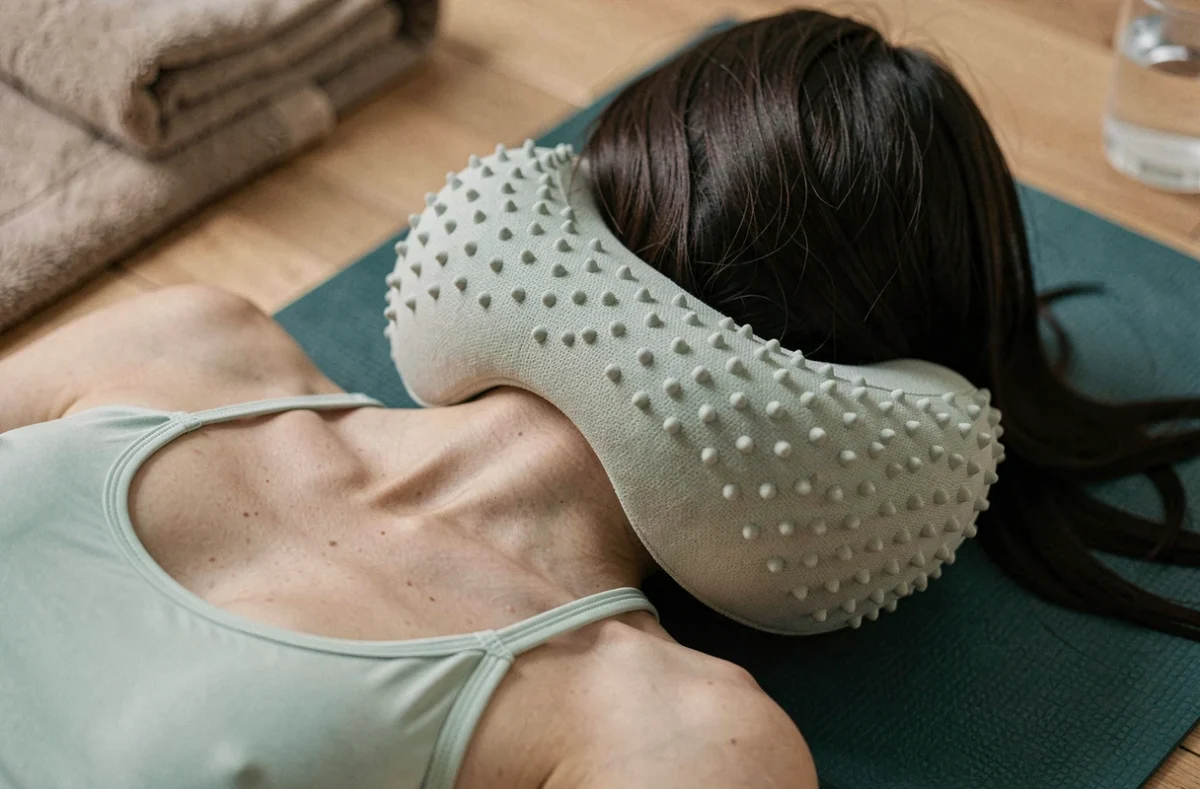
What to look for in a neck massage cushion: beyond the price
Price is a point of reference, not a reliable indicator of quality. Several technical features make for a more useful comparison.
- The number and arrangement of the massage nodes: four are enough for the neck, while eight also cover the shoulders. More is not always better if the contact area is poorly distributed.
- The option to turn off the heat independently of the massage: some people cannot tolerate it, and a device without this option may be unusable in summer.
- Reversible rotation, which prevents the movement from becoming monotonous and lets the muscles be worked from different angles.
- A removable, washable cover—a small maintenance detail that affects the device’s lifespan.
The comfort of a neck massage cushion also depends on things you cannot see in a photo: motor noise, the softness of the covering, and residual heat after the device is switched off. User reviews remain the most reliable source for these sensory details, provided you compare several accounts rather than relying on an overall rating.
Known limitations and open questions about neck massage cushions
No specific standards for consumer massage cushions were identified in the French regulatory databases consulted. These devices are subject to general electrical safety requirements, not medical-device regulations. The lack of a dedicated framework means that manufacturers’ advertised benefit claims are not subject to specific health oversight.
Product recalls involving massage devices do occur, particularly due to overheating or electrical insulation defects. Checking the public recall database before buying can help you find out whether a model has been flagged.
Mechanical durability is another common unknown. Few manufacturers provide information about the expected lifespan of their motors or the availability of replacement parts. A cushion whose motor fails after a few months of daily use is worthless, whatever its original purchase price.
A neck massage cushion provides occasional comfort; it is not a medical device. Keeping this distinction in mind helps avoid disappointment and choose a product that matches your actual expectations.