The European regulation on the traceability of hazardous waste, which came into effect in 2021, has drawn a red line. Yet, the figures are undeniable: less than 40% of companies truly comply with this requirement. In the face of this challenge, startups are deploying connected platforms capable of tracking every step of the industrial waste lifecycle, generating automated reports for environmental audits in the process.
Heavy industries, SMEs, everyone is concerned. Already, some groups are seeing their operational costs decrease, thanks to artificial intelligence that reshapes the collection and recovery of materials. Where robotic sorting seemed reserved for a few giants, the pooling of equipment and falling prices now open the door to smaller players.
Why waste management is becoming an essential issue for modern companies
Today, it is difficult to ignore waste management when running a business in France. The AGEC law requires every organization to ensure the traceability and sorting of waste streams, prompting a rethink of the entire chain, from manufacturing to final recovery. ADEME supports the movement through grants, while FASEP funds innovation to drive change. The latest initiative, DG Trésor has launched a call for projects to encourage SMEs and startups to develop concrete solutions for waste reduction and recovery.
In this context, the circular economy emerges as the new compass. Reuse, recycling, energy and organic recovery become the pillars of a reimagined activity. Waste audits, encouraged by regulation, no longer serve merely to tick a box: they reveal the leeway to optimize practices. From a constraint, waste recovery transforms into an opportunity for growth and innovation. Now, every residue can become a resource, every stream a support point to create value.
Here’s how companies are concretely engaging in this dynamic:
- Reducing volumes at the source by limiting waste and refining production processes.
- Organizing sorting and selective collection with appropriate channels for each type of waste: hazardous, inert, electronic, organic.
- Transforming waste into secondary materials, promoting reuse, or generating energy from recoverable residues.
The transition is not happening blindly. Digital tools, tailored training, and support are becoming the norm. On https://www.komal.fr/, the resource ‘Kömal – All about training and home courses’ details the skills to acquire to adapt to these new challenges and strengthen team professionalism. The upskilling follows the rise of environmental responsibility.
What technological innovations are revolutionizing waste management today?
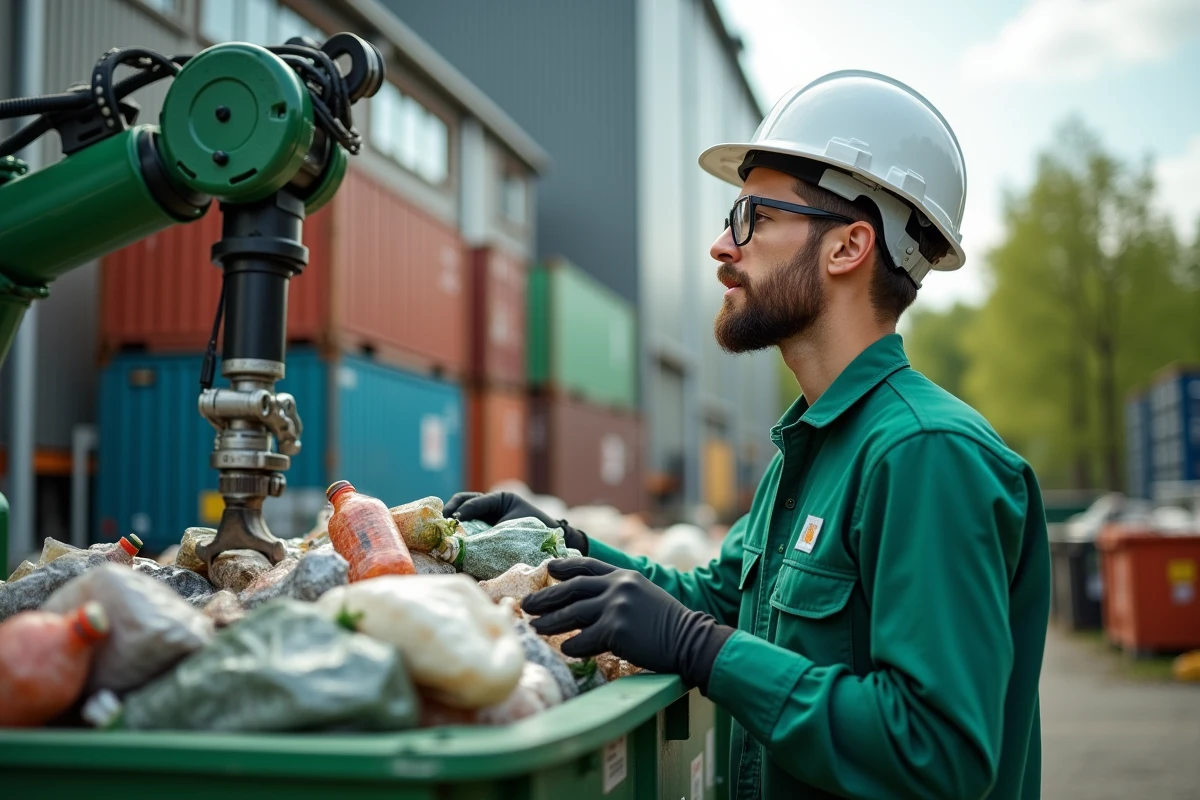
Smart waste management is taking center stage in industrial transformation. With the arrival of connected sensors, every container, every bin, every stream becomes traceable in real-time. Anomalies are spotted instantly, volumes measured accurately, and source sorting facilitated. Sorting robots take over in sorting centers, speeding up material separation, reducing labor intensity, and minimizing human errors.
Artificial intelligence is no longer just optimizing collection. It recognizes materials, anticipates incidents, manages maintenance, and refines regulatory audits. Digital platforms offer companies new levers to track their performance and limit their environmental impact while remaining aligned with the AGEC law.
Two innovations stand out to transform the game:
- Chemical recycling finally allows for the treatment of complex plastics, long considered impossible to recycle or destined for landfill.
- Methanization turns organic waste into a resource, generating biogas and fertilizers, thus closing the loop of organic recovery.
Management is also going fully digital: dematerialized tracking, automated traceability, optimized collection. This technological shift marks a lasting break: every waste, properly tracked, can become a lever for value creation in an ambitious circular economy.
Concrete solutions in action: inspiring examples from sectors that are changing the game
The construction industry is reinventing itself profoundly. The flow of materials is taking a new turn thanks to reuse and waste recovery from construction sites. Innovative operators are deploying platforms where materials from deconstruction find a second life, reducing pressure on raw materials and limiting greenhouse gas emissions.
In industry, energy recovery is becoming essential, with plants converting their organic waste into biogas, used on-site or injected into the grid. This virtuous loop reduces costs and strengthens energy autonomy while fitting into a circularity logic.
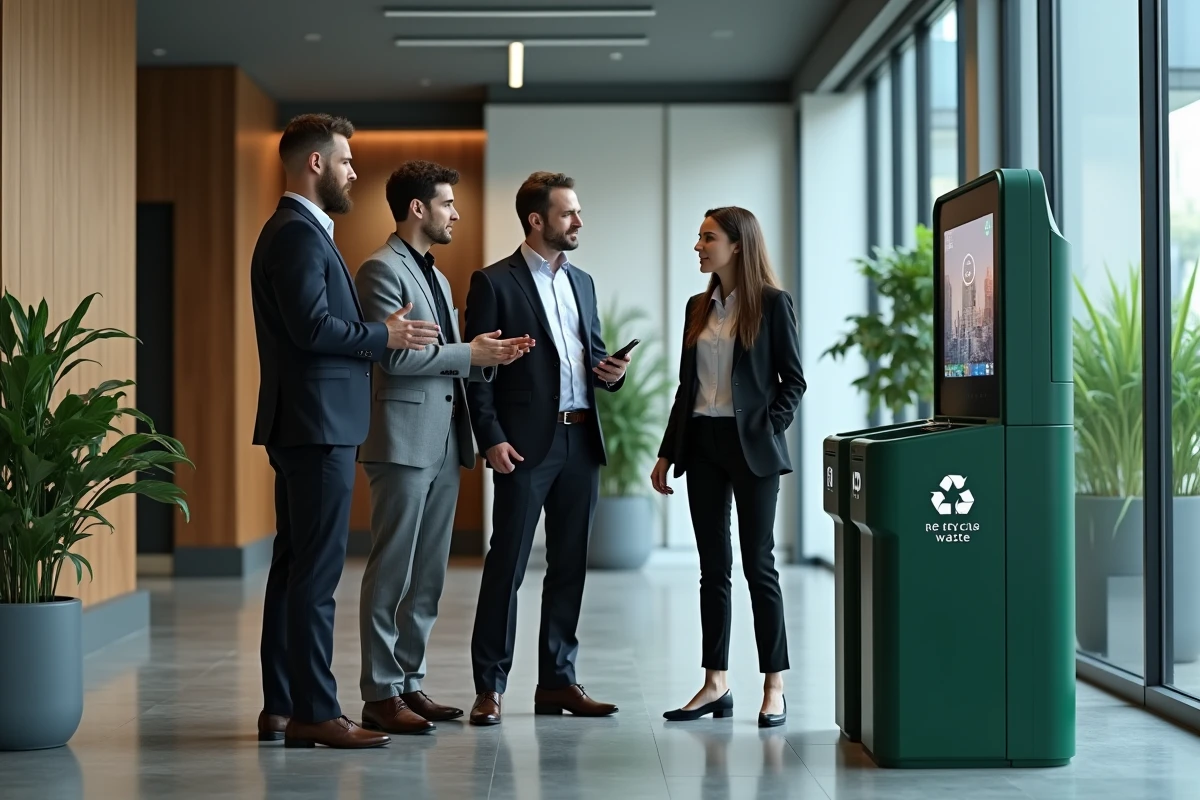
The tertiary sector is also accelerating its pace. Automated sorting of paper, plastic, glass, integrated digital traceability: compliance with the AGEC law is becoming a daily reality. Audits conducted by specialists highlight previously unsuspected recovery opportunities. Each stream can then be rethought, optimized, and recovered.
Here are some concrete illustrations of this shift towards circularity:
- In large retail, the organic recovery of unsold goods is being structured, reducing waste and creating links with local agriculture.
- Connected equipment, combined with artificial intelligence, automates sorting and collection, improving environmental performance and resource tracking.
This fundamental movement in favor of the circular economy is no longer reserved for a few pioneers. It is permeating all sectors, transforming every regulatory constraint into a concrete opportunity. French companies, large or small, are integrating these solutions and shaping new balances, where waste ceases to be a burden and becomes an active resource. Tomorrow, the question will no longer be how to get rid of waste, but how to make the most of it.