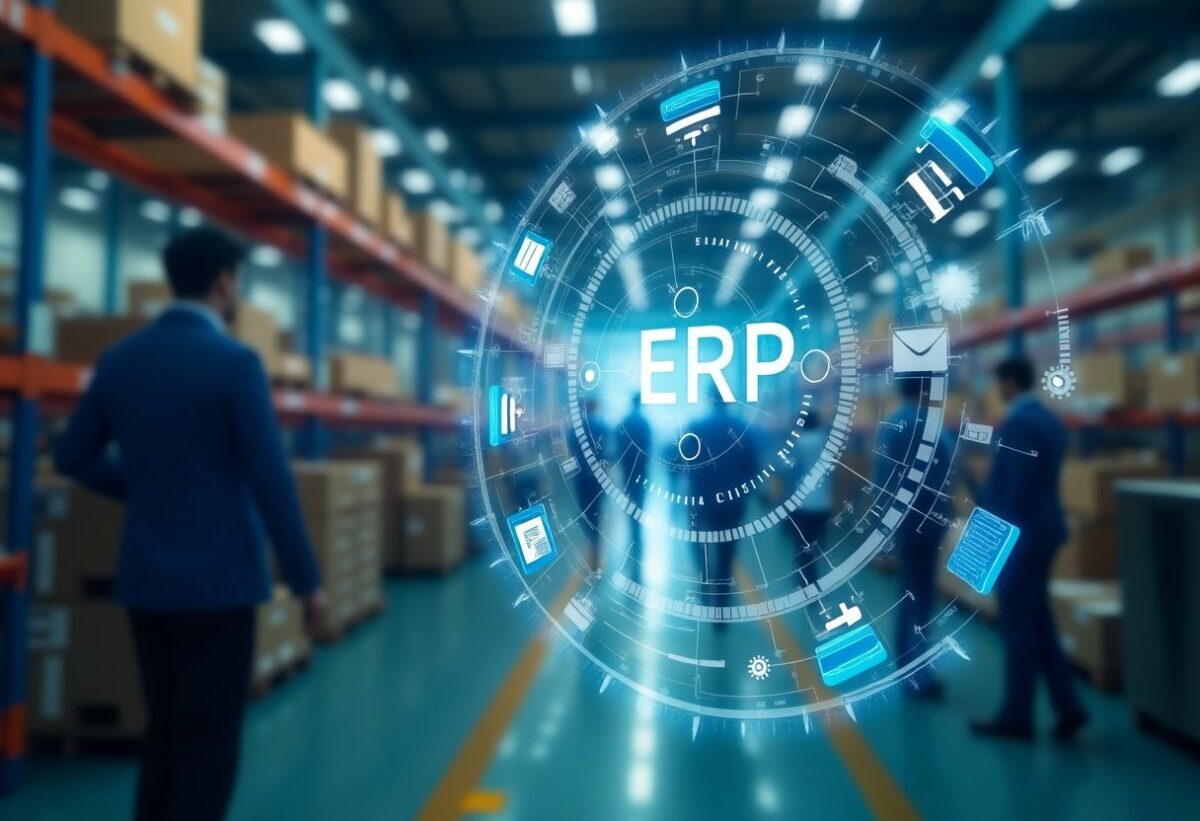
In a world where technology is developing at a breakneck speed, companies must constantly adapt to remain competitive. Enterprise Resource Planning (ERP) systems have taken a central place in this dynamic. For the industrial sector, these solutions have become essential tools.
An Industrial ERP allows for the connection, automation, and optimization of all facets of the company, from production chains to financial management. The potential of ERPs in the industrial sector cannot be underestimated. Improvements in productivity, transparency, and decision-making are some of the promises they offer.
What is an Industrial ERP?
Before diving into the benefits and challenges associated with these systems, it is essential to understand what they truly encompass. An Industrial ERP is an integrated software solution that covers all operations of a manufacturing company.
Typical components include:
- Inventory Management: real-time tracking of stock levels, reduction of surplus, and optimization of supplies.
- Production Planning: improving efficiency through optimal resource allocation and capacity management.
- Quality Control: ensuring that each product meets the required standards before going to market.
- Financial Management: consolidating the company’s finances into a single platform for instant clarity.
How ERP Transforms Industrial Operations
The impact of an Industrial ERP on operations is profound and multi-dimensional. It influences virtually all areas of production and management.
- Process Automation: by eliminating redundant manual tasks, an ERP reduces human errors and frees up time to focus on more strategic tasks.
- Resource Optimization: by providing an overview of available resources, it allows for better allocation and utilization of them.
- Improved Communication: with a centralized platform, all stakeholders have access to the same information, promoting effective coordination.
- Cost Reduction: by eliminating inefficiencies and maximizing resource use, the ERP contributes to more economical management.
The Challenges of Implementing an Industrial ERP
Despite its many advantages, implementing an Industrial ERP is not without challenges. These can arise from various factors and must be managed carefully.
Among the main challenges are:
- Resistance to Change: employees may be reluctant to adopt new technologies, requiring effective change management strategies.
- High Initial Costs: the initial investment for acquiring and installing an ERP can be significant.
- Complexity of Customization: adapting an ERP to the specific needs of a company can prove complex and time-consuming.
- Maintenance and Updates: it is crucial to allocate resources to keep the system up-to-date and functional.
Future Trends in Industrial ERPs
As technology continues to evolve, industrial ERPs are adapting and integrating new features to meet the changing needs of businesses.
Major trends include:
- Artificial Intelligence: the integration of AI enables predictive analytics and data-driven decision-making.
- Cloud Computing: more and more companies are migrating their ERPs to the cloud for improved accessibility and security.
- IoT and Sensor Integration: the Internet of Things offers real-time tracking and optimization possibilities for production chains.
- Increased Customization: solutions are becoming more modular to precisely fit the needs of each company.