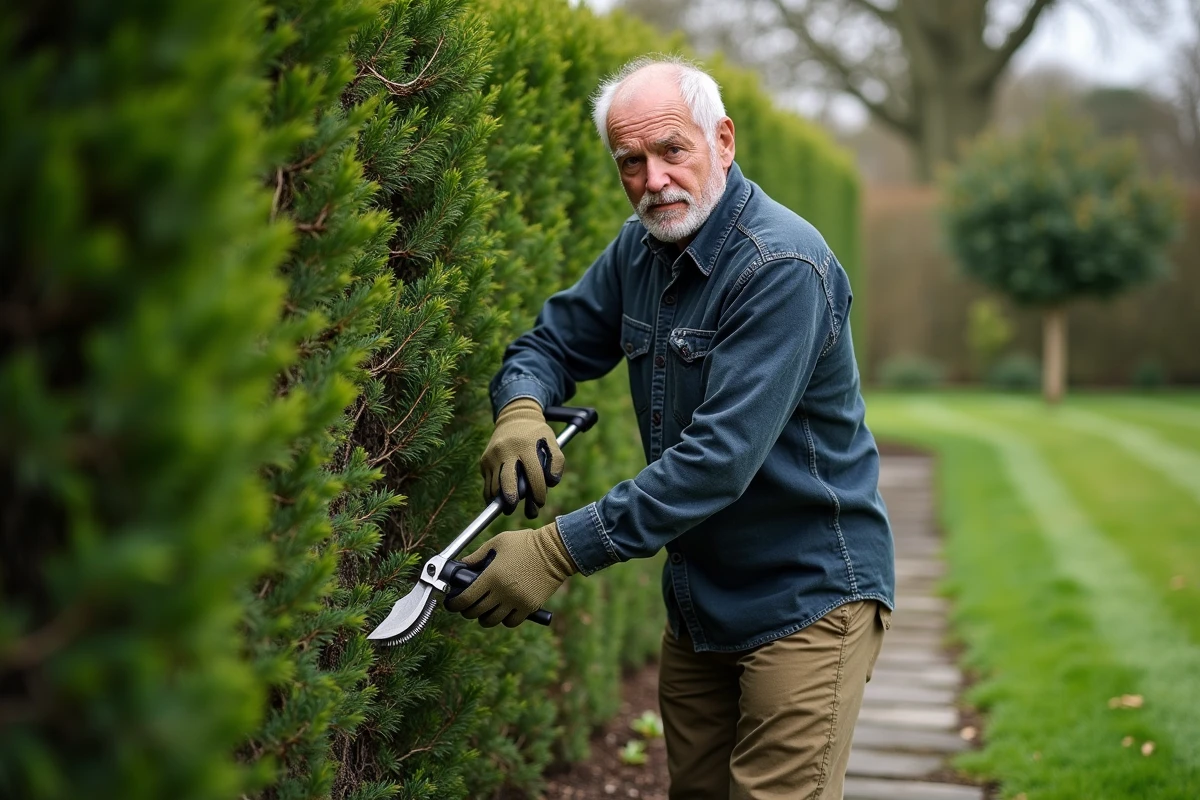
A hedge that overflows onto the path or encroaches on the neighbor’s property is a concrete problem that many gardeners face after a few years without intervention. Thinning out an overly wide hedge is not just about running the hedge trimmer along the sides: depending on the species and the age of the planting, a poorly placed cut can leave permanent gaps in the foliage. Understanding where to cut, with what tool, and at what time can completely change the outcome.
Old wood and green zone: what determines the result
You may have noticed that the inside of a dense hedge often consists of dry, leafless branches? This is what is called old wood. Active vegetation (leaves, young shoots) concentrates on a thin outer layer, sometimes just a few centimeters thick.
This detail changes the entire strategy. If you cut beyond this green layer, you fall into bare wood. Some species do not regrow on old wood: thuja and most evergreen conifers are among them. Cutting too deep into a thuja leaves a permanent brown patch.
In contrast, species like hornbeam, beech, or privet can tolerate severe pruning. They will regrow from dormant buds located on the old branches. Before any intervention, it is essential to identify what makes up your hedge to know how far to go without taking risks.
When the goal is to easily thin out an overly wide hedge, this distinction between tolerant species and those sensitive to old wood is the first criterion to check.
Progressive reduction or hard pruning: choose according to the species
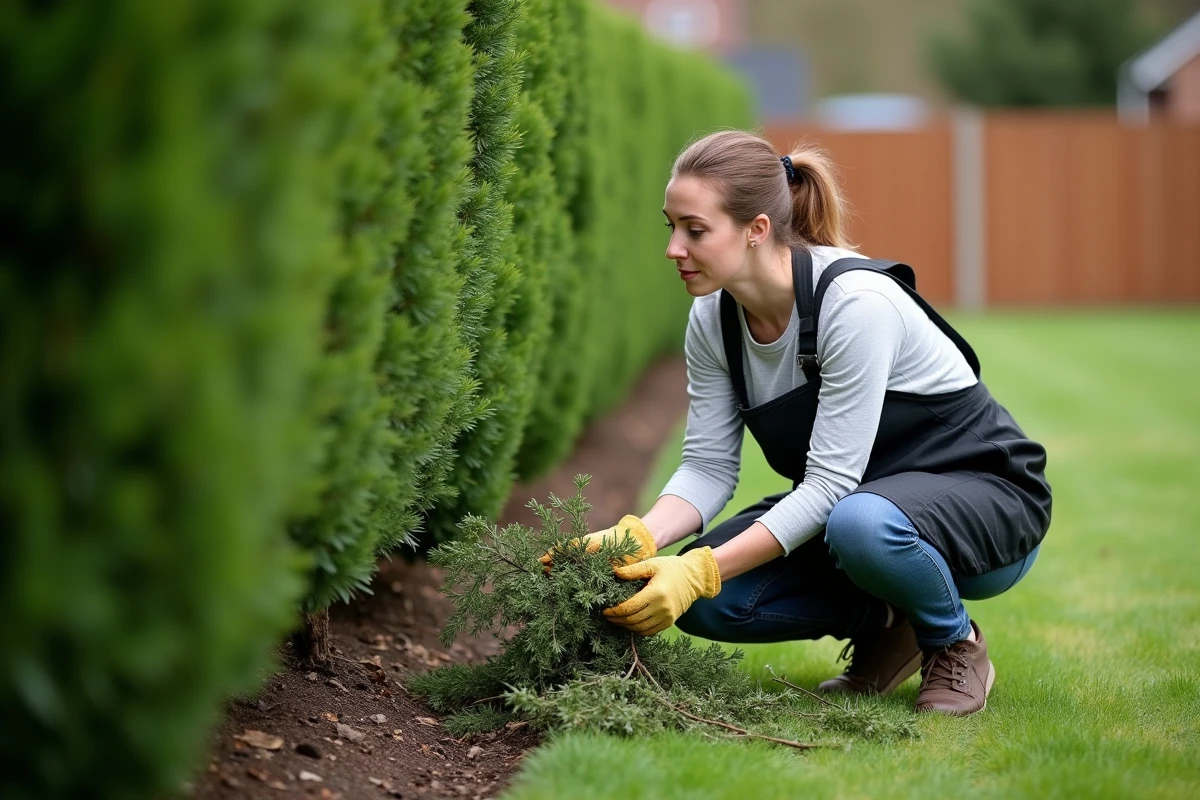
There are two approaches. The first involves reducing the width all at once, sharply. This is suitable for deciduous hedges or tolerant evergreen shrubs (laurel, privet, yew). You cut one entire side to the desired depth, then let the hedge regrow for a full season before treating the other side.
Pruning only one side per year prevents weakening the hedge. The unpruned side continues to nourish the plant during regrowth. This method requires patience, but it results in a dense outcome in the long term.
The second approach is progressive reduction. This is necessary for conifer hedges or very old subjects. Each year, a modest thickness is removed, staying within the area that still bears foliage. The idea is to stimulate lateral growth without ever exposing bare wood.
Case of thuja and evergreen conifers
Thuja is the most common species in gardens and the most deceptive. A cut that is too severe on a thuja cannot be undone. Old wood does not produce new leafy shoots. The only realistic option is to reduce by small annual passes, accepting that the gain in width will be limited.
When the thuja hedge has grown to a size that exceeds any maintenance pruning, complete reconstruction (removal and replanting) sometimes becomes more logical than a losing battle against old wood.
Suitable tools for thinning out a thick hedge
A standard hedge trimmer is sufficient for regular maintenance, but when faced with a very wide hedge, the inner branches often reach several centimeters in diameter. A standard hedge trimmer struggles with wood of this thickness.
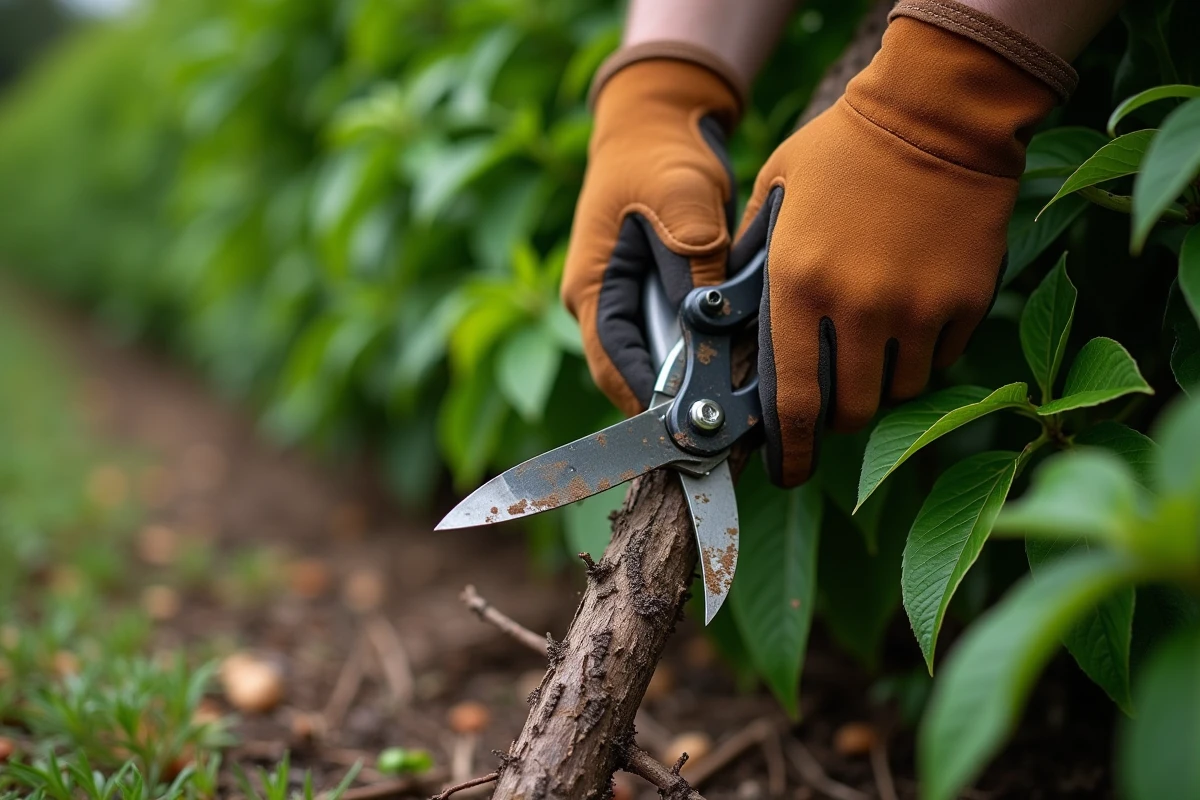
- The loppers or pole pruner can cut branches up to four or five centimeters in diameter. This is the basic tool for clearing the inside of the hedge before any finishing cuts.
- The pruning saw (handheld or pole) is used for thicker branches. It offers precise control, useful for choosing exactly where to cut without damaging neighboring shoots.
- The pole hedge trimmer, electric or battery-powered, makes working at height easier without a ladder. Recent battery models are quieter and more maneuverable, making them suitable for long interventions on a hedge that needs to be gradually reduced.
The logic is simple: start with the big cuts (loppers, saw), then finish at the surface with the hedge trimmer for uniformity.
Pruning period and wildlife protection
Pruning a thick hedge generates noise and disturbance. However, hedges shelter nests, especially in spring and early summer. The LPO reminds us to avoid any pruning during the nesting period to prevent destroying active nests.
Specifically, the most suitable window for thinning occurs at the end of summer (September) or late winter (February-March), before bud break. These two periods have a practical advantage: sap is less active, which limits stress for the plant, and birds are not nesting.
Giving the hedge a trapezoidal profile
When you reduce the width, take the opportunity to give the hedge a slightly trapezoidal profile: wider at the base than at the top. The trapezoidal profile ensures that light reaches the base of the hedge, preventing gradual thinning at the bottom. This is a technical reflex that professionals systematically apply, and it makes a real difference in the density of foliage over the long term.
Maintenance after reduction pruning
A hedge that has just been severely reduced needs a boost. Adding compost at the base, at the beginning of the following spring, stimulates recovery. Mulching retains moisture and limits competition from weeds.
Resuming light maintenance pruning twice a year is enough to maintain the achieved width. Without this regularity, the hedge will regain its original thickness in a few seasons.
The most effective approach is to prune slightly more often rather than waiting for an overflow that necessitates drastic cuts. A pass with the hedge trimmer in June and another in September keeps most hedges within reasonable proportions, without ever having to dive back into old wood.